
Charles Rabiqueau (c.1712–1784) was a Paris-based lawyer turned physicist and engineer–optician to the French crown, who made his name by bringing experimental science to the public. He ran a private “cabinet de physique” and staged spectacular lecture-demonstrations on electricity, optics, and mechanics for fashionable audiences in mid-eighteenth-century Paris. His shows, apparatus, and printed courses placed him among a small cohort of performer-scientists, who translated elite natural philosophy into hands-on displays that audiences could see, touch, and debate.
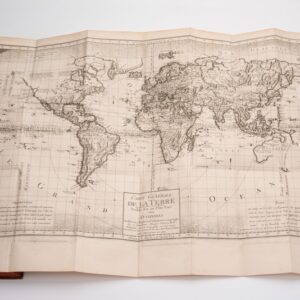
Rabiqueau’s publications distilled this theatrical pedagogy into a distinctly physical-mechanistic program. In Le Spectacle du feu élémentaire, ou Cours d’électricité expérimentale (1753), he promised not just demonstrations but the “explanation, cause, and mechanism” of electrical fire—explicitly framing natural effects as the outcomes of matter in motion, contact, and apparatus-guided forces rather than occult qualities. His later Le Microscope moderne (1781) extended the same ambition, advertising a “nouveau méchanisme physique universel.” Whatever the limits of his theories, the central theme was clear: phenomena should yield to mechanical analysis, experimentation, and instrument-mediated observation.
Historically, Rabiqueau matters less as a system builder than as a conduit who normalized mechanistic explanation within a culture of demonstration. By packaging electricity and optics as intelligible mechanisms before lay publics, he helped shift natural knowledge from scholastic causation and marvels toward repeatable causes, devices, and measurable effects. Even when his speculative cosmology deviated (he polemicized against Newton and explored unorthodox cosmography), the impact of his practice endured.
-
-
Add to cart
 Quick View
 - Curiosities - Miscellanea, World
Le Microscope moderne.
- $4,000
- Anticipating Flat-Earth Thought.
-
-