
Matthäus Seutter was born in Augsburg in 1678 and became one of the most prolific and influential German map publishers of the first half of the eighteenth century. Seutter apprenticed in Nuremberg under Johann Baptist Homann, a formative experience that shaped both his engraving technique and business approach. Around 1707, Seutter established an independent publishing house in Augsburg, which, over the following decades, grew into a major European cartographic firm. In 1731, Suetter was named Imperial Geographer (Geographus Caesareus) by the Holy Roman Emperor Charles VI, further supporting his momentum.
Seutter’s firm was known for high-quality engraving, baroque cartouches, and for reproducing and adapting important foreign maps for the German market. After Seutter died in 1757, the business passed through family connections to his son-in-law, Tobias Conrad Lotter. Lotter continued to publish and reissue Seutter plates, sometimes altering imprints and ornaments to claim them more as his own. In general, Seutter’s practice exemplifies the commercial, collaborative, and often derivative nature of European cartography in the 18th century.
-
-
Add to cart
 Quick View
 - Europe, Iceland & Scandinavia
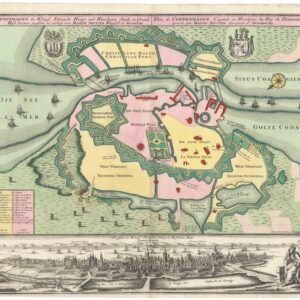
Coppenhagen die Königl. Dänische Haupt und Residentz Stadt in Grund Riss.
- $1,600
- 1740 Seutter Ground Plan of Copenhagen with Panoramic View.
-
-
-
-
Add to cart
 Quick View
 - East & Midwest United States, United States
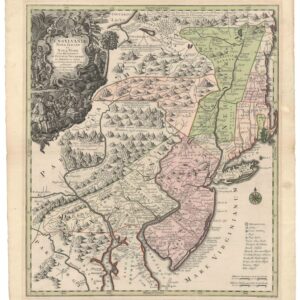
Pensylvania Nova Jersey et Nova York cum Regionibus Ad Fluvium Delaware…
- $2,900
- Seutter’s first state map of Pennsylvania, Jersey, and New York, with original color.
-
-
-
-
Add to cart
 Quick View
 - East & Midwest United States
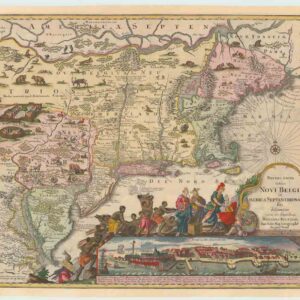
Recens Edita totius Novi Belgii, in America Septenrionali siti, delineatio cura et sumptibus
- $4,000
- The most widely emulated map of colonial North America, with one of the earliest views of New York City.
-
-
Archived
- Out of Stock
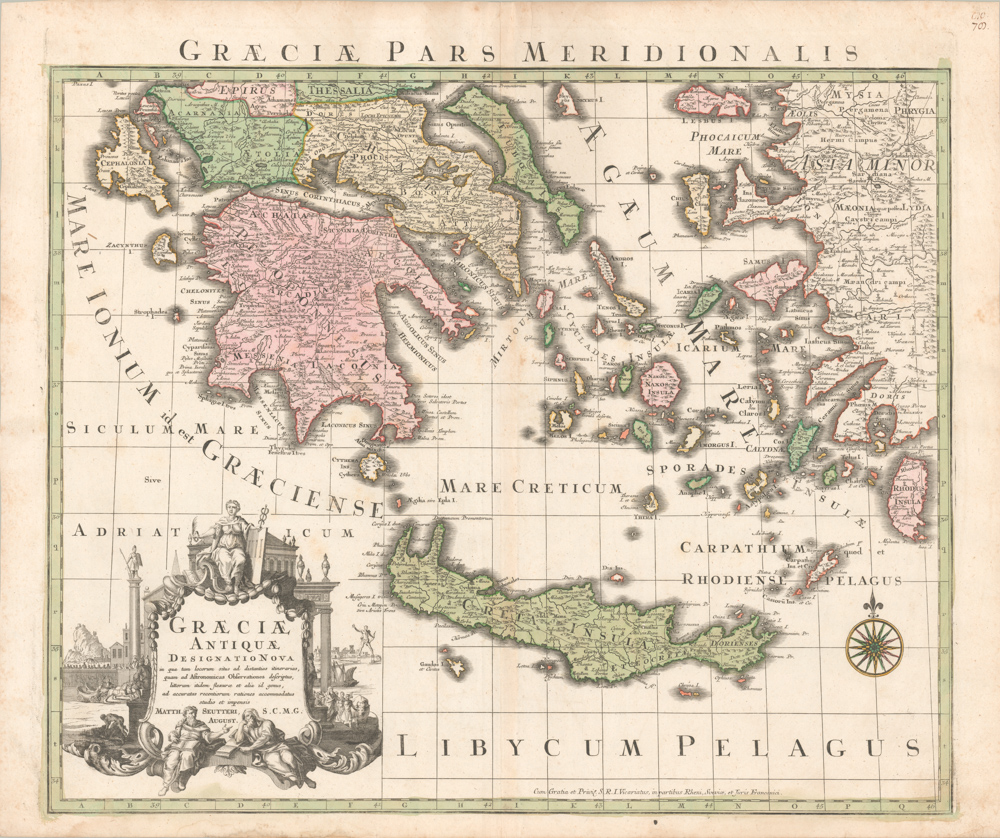
- Europe, Greece & the Balkans
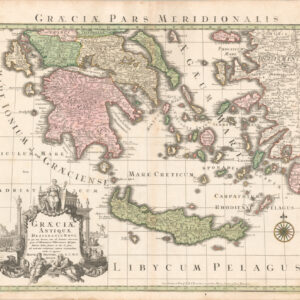
Graeciae Antiquae Designatio Nova
- Seutter’s Enlightenment-era celebration of Ancient Greece.
- Read moreQuick View
-
- Out of Stock
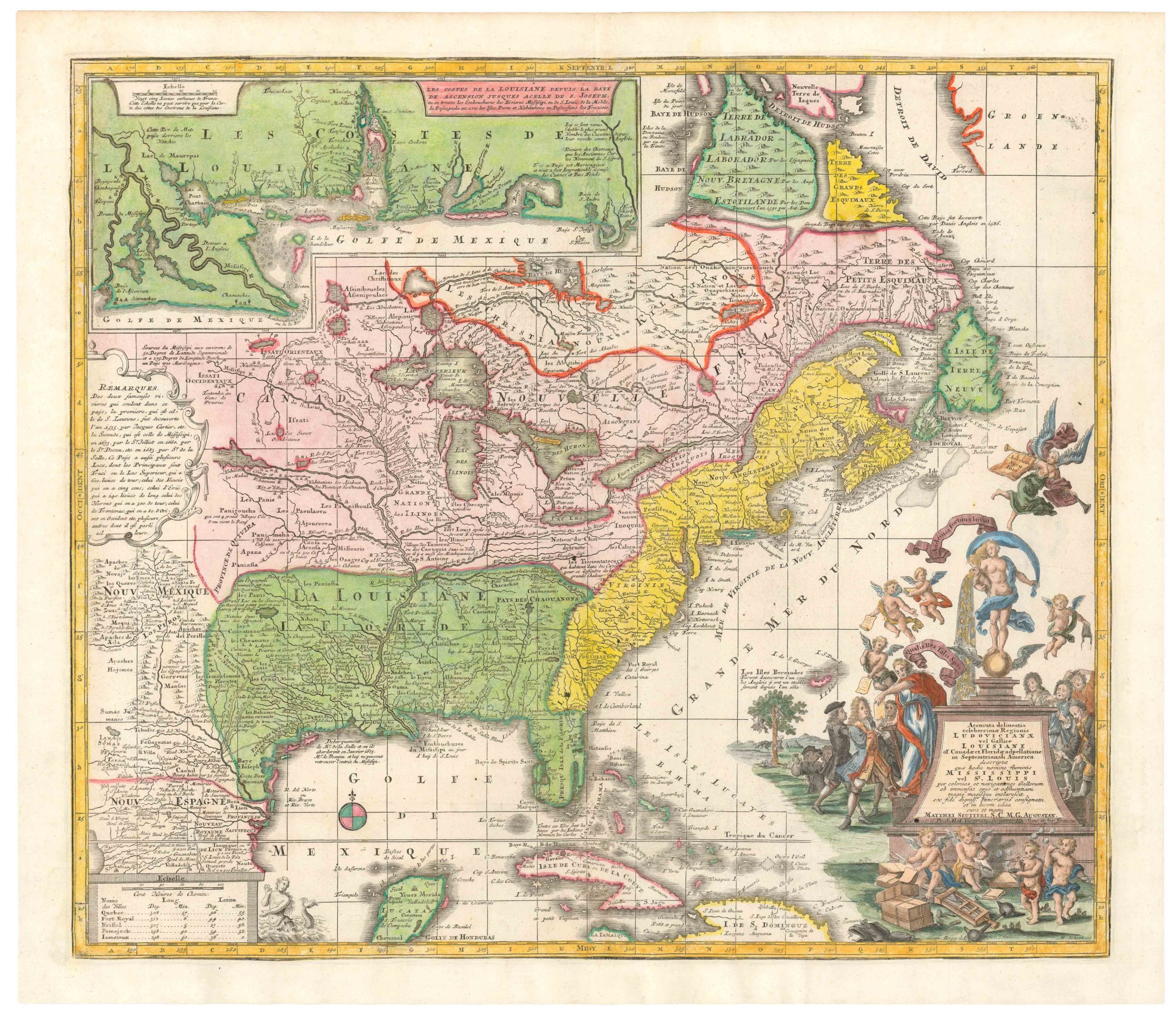
- East & Midwest United States
Accurata delineatio celeberrimae Regionis Ludovicianae vel Gallice Louisiane ol. Canadae et Floridae Adpellatione in Septemtrionali America Descriptae quae Hodie Nomine Fluminis Mississippi vel St. Louis
- A work of early political satire produced at the peak of Voltaire’s popularity.
- Read moreQuick View
-
- Out of Stock
- Curiosities - Miscellanea
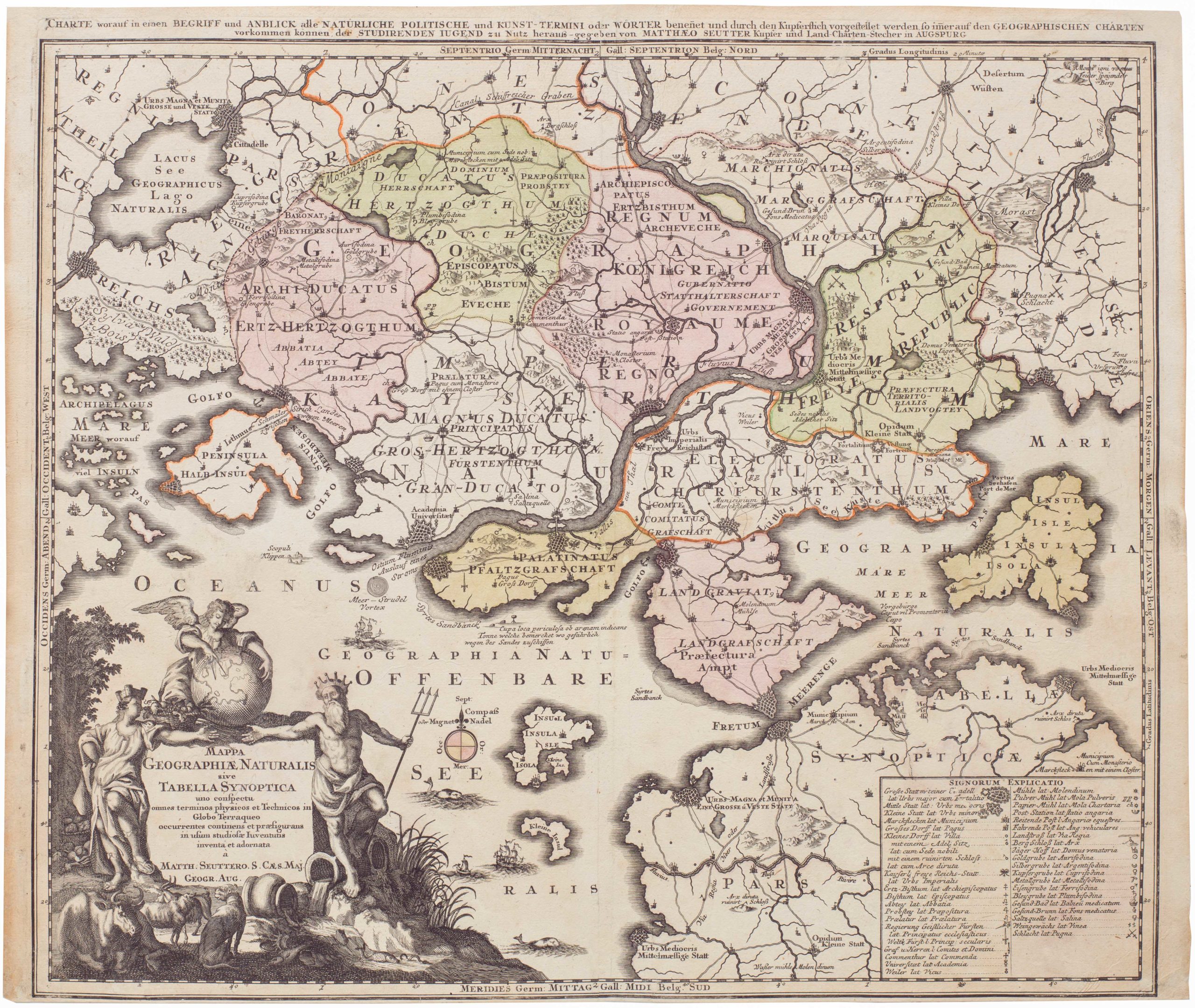
Mappa geographiae naturalis sive tabella synoptica / inventa et adornata à Matth. Seuttero. S. Caes. Maj. geogr. Aug.
- Unusual and fascinating look at mapmaking in the 18th century
- Read moreQuick View
-